Cost-Effective Materials That Resist Water Damage
Vinyl and Laminate Flooring in Hattiesburg for high-traffic areas, moisture-prone rooms, and quick installation timelines
Bathrooms, kitchens, laundry rooms, and entryways expose flooring to water contact that destroys hardwood and causes most carpet to develop mold in Mississippi's humid climate. Vinyl plank and laminate offer water resistance at significantly lower material costs than tile or hardwood, with modern products replicating wood grain and stone patterns closely enough that visual differences from across a room are minimal. Barrios Enterprise LLC installs both materials with attention to the subfloor flatness that determines whether the finished floor looks professional—even small bumps or dips telegraph through thin vinyl and laminate, creating visible waves and hollow spots that feel unstable when walked on.
Installation speed differs markedly from hardwood or tile since most vinyl and laminate products use click-lock edges that join without adhesive or nails, allowing entire rooms to be installed in single-day sessions once subfloor prep is complete. The prep work matters more than the installation itself: high spots get ground down, low areas receive leveling compound, and the surface is cleaned thoroughly since even small debris creates bumps under the flooring.
Request product selection assistance and installation scheduling to review waterproof options and styles that match your existing finishes.
What Proper Installation Requires
Subfloor flatness tolerances for vinyl and laminate are stricter than for most other materials—variations exceeding 3/16 inch over a 10-foot span create noticeable dips and raised areas in the finished floor. Underlayment choice affects sound transmission and comfort: foam reduces hollowness when walking but offers minimal moisture protection, while cork provides better sound dampening and slight cushioning. In Hattiesburg installations over concrete slabs, vapor barriers prevent ground moisture from reaching the flooring, an issue that causes laminate core swelling and vinyl adhesive failure in products that aren't fully waterproof.
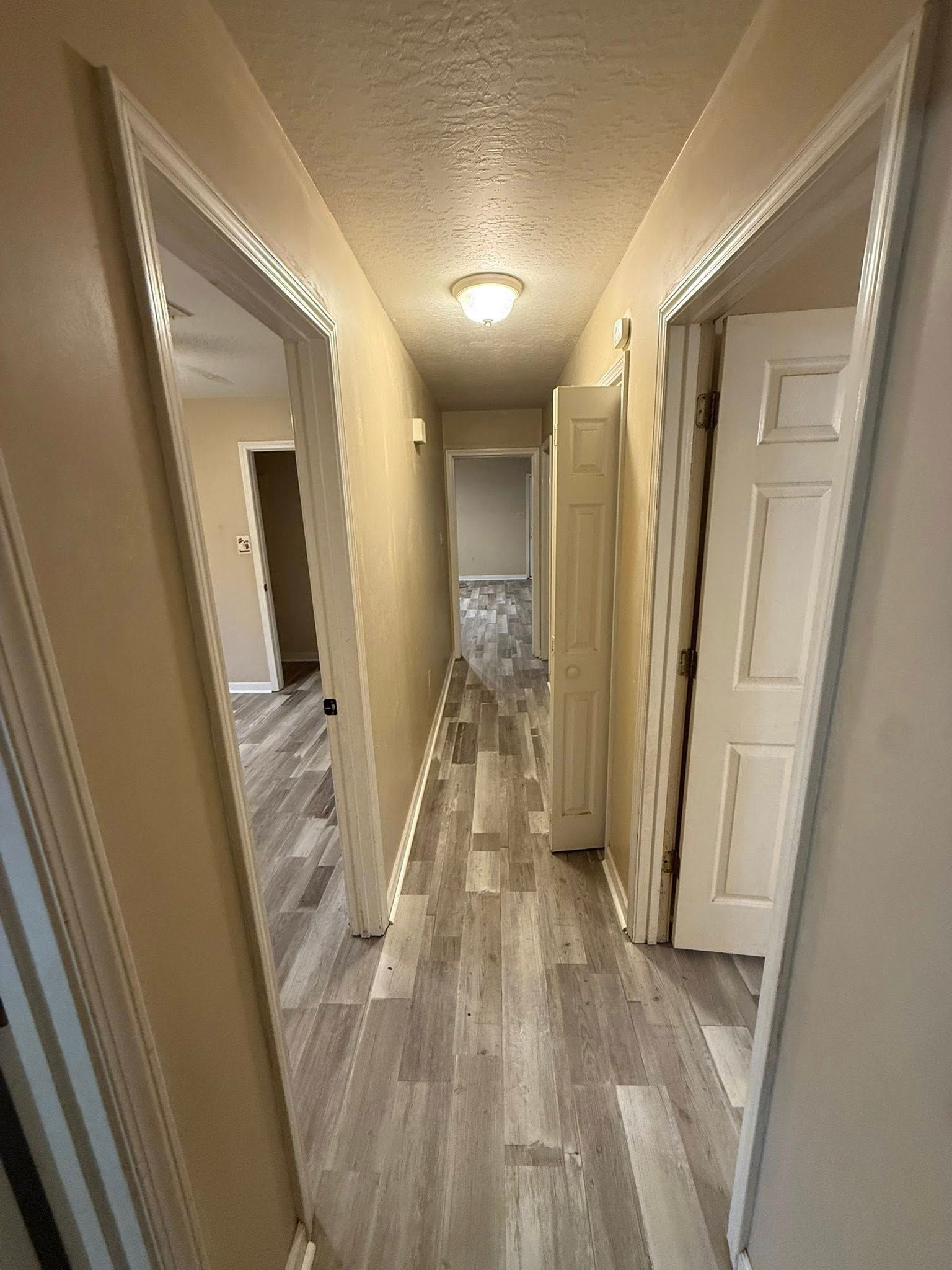
After installation, plank seams lock tightly without separation, the floor feels stable without flexing under weight, and transitions to other rooms sit flush without height differences that create tripping hazards. Water spills can be wiped up without concern for immediate damage, making these materials functional for real-world use in spaces where moisture exposure is routine rather than accidental.
Installation timelines run shorter than tile or hardwood—typical rooms complete in one to two days including prep work, compared to several days for tile that requires mortar and grout curing. The service covers subfloor evaluation and correction, underlayment installation, plank cutting and fitting, and transition piece installation at doorways and material changes. Unlike hardwood, these materials don't require acclimation periods or finish curing time, so rooms return to use immediately after installation.
What Property Owners Usually Ask
Questions about these materials often focus on differentiating between vinyl and laminate performance and understanding how they compare to traditional flooring.
What's the difference between vinyl plank and laminate?
Vinyl plank uses PVC construction that's fully waterproof and slightly flexible, while laminate has a wood-fiber core that resists moisture but can swell if water sits on it for extended periods.
How do these materials hold up in Hattiesburg's humidity?
Both perform well in humid conditions if properly installed with moisture barriers—neither expands and contracts as much as hardwood, reducing seasonal gap problems common with solid wood floors.
When does it make sense to choose these over hardwood?
Vinyl and laminate make sense for moisture-exposed areas, homes with pets or children where scratches are likely, and situations where budget constraints make hardwood impractical.
Why does subfloor prep matter more for these than other materials?
Thin construction means every subfloor imperfection shows through the surface—tile and hardwood have enough thickness to span minor irregularities, but vinyl and laminate conform to whatever's underneath them.
What maintenance do these floors require?
Regular sweeping or vacuuming removes grit that scratches surfaces, and damp mopping with pH-neutral cleaners handles spills—avoid steam mops on laminate since prolonged heat and moisture can damage seams.
Barrios Enterprise LLC helps you evaluate waterproof versus water-resistant options and selects underlayment appropriate for your subfloor type and the room's function. Call (601) 323-2657 to discuss your project and review product samples that fit your budget and performance requirements.